01
AI Adoption & Change
Shape a practical path through strategy, readiness, stakeholder engagement, communication and implementation.
I’m Mel Tomlinson. I help leaders, teams and organisations turn AI uncertainty into confident, practical use.
Work with MelMy work sits at the intersection of AI adoption, business, change, coaching and human behaviour. Because introducing AI is not simply about choosing the right technology. It is about helping humans understand where it belongs in their work, how to use it responsibly and how to learn with confidence.
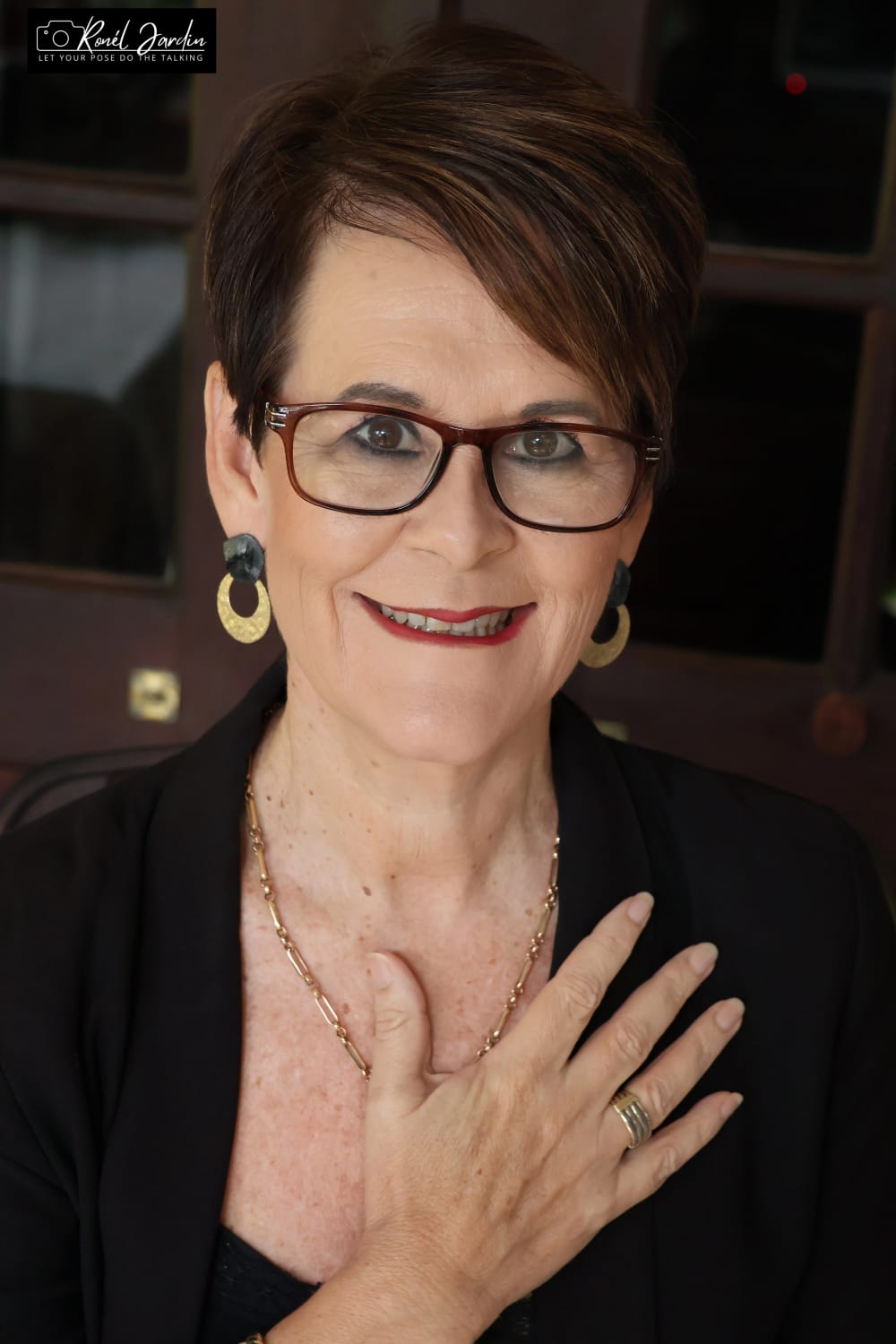
I’m a South African business coach, change practitioner, facilitator and AI trainer who became deeply interested in a question organisations cannot afford to ignore:
What actually helps humans adopt AI well?
The technology is moving extraordinarily quickly. Humans and organisations do not always move at the same speed. Some people are experimenting enthusiastically. Some are overwhelmed. Some are quietly using their own tools. Others are avoiding AI completely.
This is where my work lives. I make AI more understandable, usable and human, building the confidence, language, judgement and practical capability people need to navigate it.
AI can help us think, create, analyse, learn, challenge assumptions, see patterns and explore possibilities. But the goal should not simply be to automate everything humans currently do.
How can we use AI to become better at being human?
More curious. More thoughtful. More adaptable. More creative. More capable of exercising judgement.
Humaning with AI means working with artificial intelligence while deliberately protecting and developing the human capabilities that matter.
People often do not need another demonstration of what AI can do. They need clarity about why, where, what, how and what responsible use looks like.
When those things become clearer, people become more curious, courageous and willing to learn. Many organisations that appear to have an AI adoption problem may actually have an AI confidence problem.
My work takes different forms depending on where your organisation is on its AI journey.
Shape a practical path through strategy, readiness, stakeholder engagement, communication and implementation.
Build confidence through hands-on learning rooted in the work your people actually do.
Find what is holding people back, from unclear permission and weak use cases to shadow AI and missing guardrails.
Equip the champions, coaches, subject experts and sponsors who turn isolated experiments into shared progress.
Create space for useful strategic conversations about AI, culture, capability and organisational readiness.
Explore Humaning with AI, confidence, curiosity and the changing nature of work through talks and facilitated conversations.
01AI adoption is a people-and-workflow transformation problem, with a technology component. Not the other way around.
02Curiosity requires confidence. People experiment when they feel safe enough to learn.
03AI can amplify who we already are. The challenge is deciding what we want it to amplify.
04We should not only ask what AI can do for us. We should ask what working with AI is doing to us.
05Sometimes people need permission to make AI slop before they develop the discernment to create something better.
06AI should be brought into our thinking loop without taking humans out of it.
My work is useful when an organisation is moving beyond isolated experimentation and needs a practical, human-centred way forward.
Based in Cape Town, South Africa, I work locally and internationally, virtually and in person where appropriate.
My background in business coaching, facilitation and change gives me a distinctly human perspective on AI adoption. I focus on the questions organisations face when humans actually have to use the technology.
Through consulting, coaching, workshops, facilitation and thought leadership, I help organisations move towards more confident, responsible and practical AI adoption.
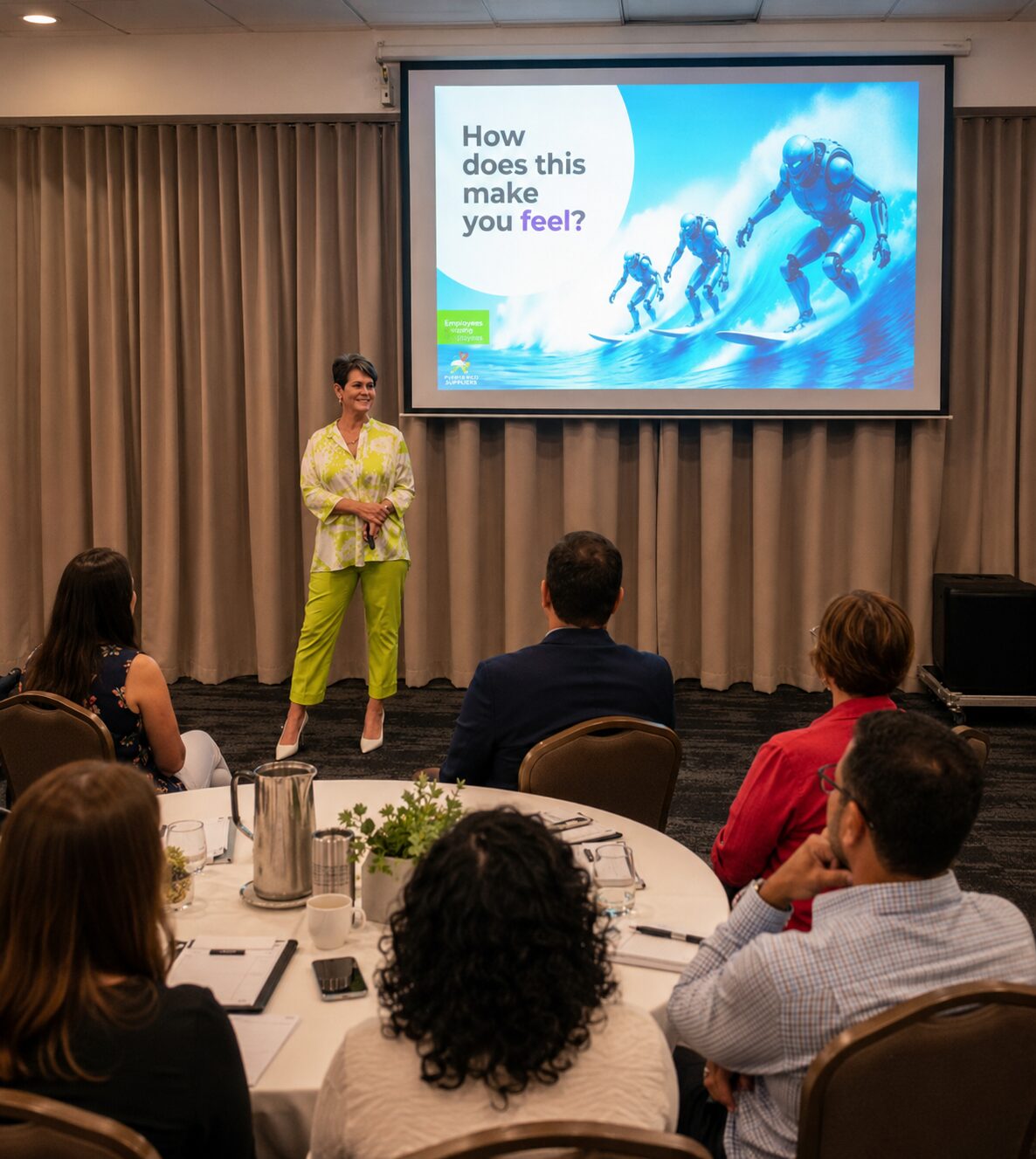
I speak about the human side of AI in ways that invite curiosity, honest conversation and practical action.
My talks and facilitated sessions help leaders and teams explore what AI means for their work, their people and the capabilities they will need next.
A curious exploration into the unknown, designed to meet people wherever they are at the water’s edge.
The intention is simple: help people become comfortable enough to begin, curious enough to explore and confident enough to take the next practical step in their own work.
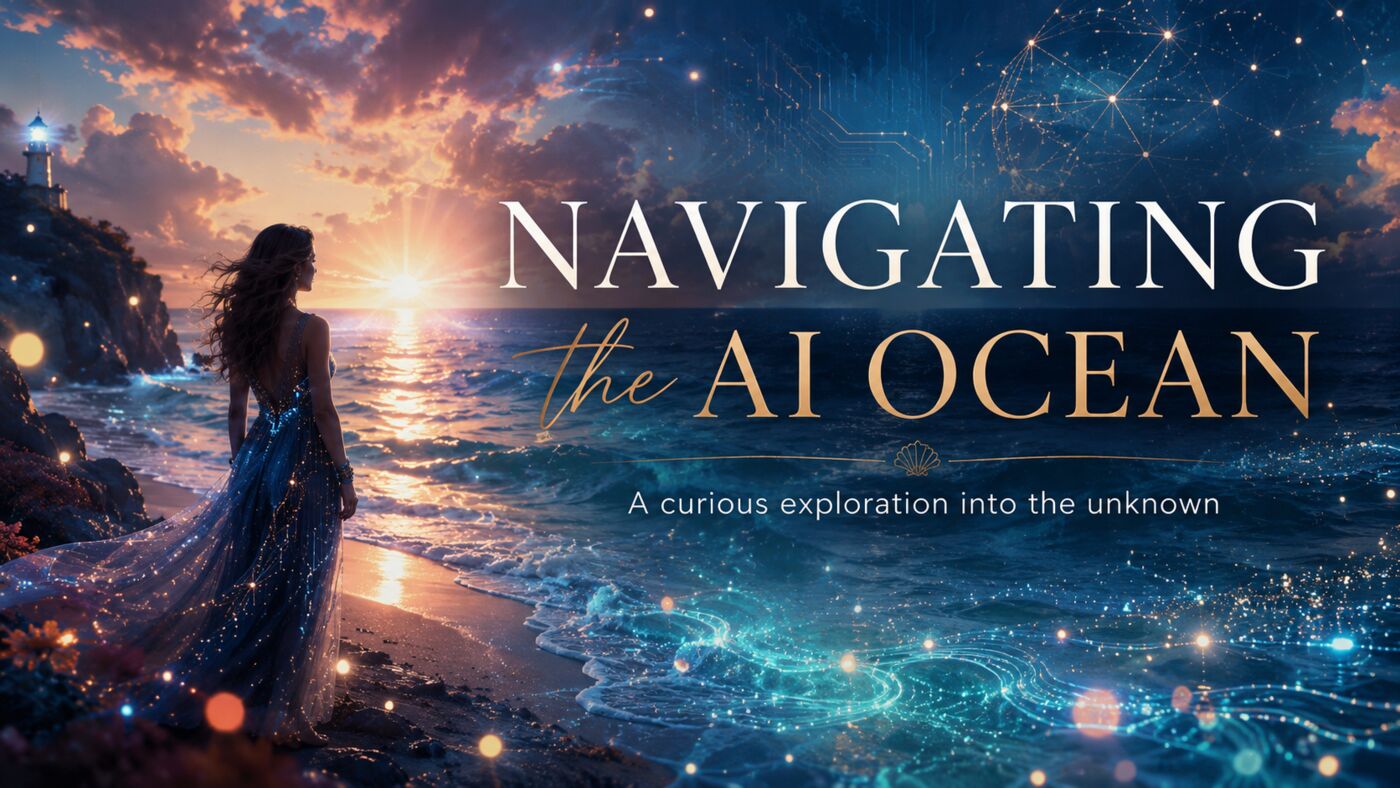

AI confidence and human-centred AI adoption visuals from the 2026 Brave Heart Breakfast keynote by Melody (Mel) Tomlinson, AI facilitator.
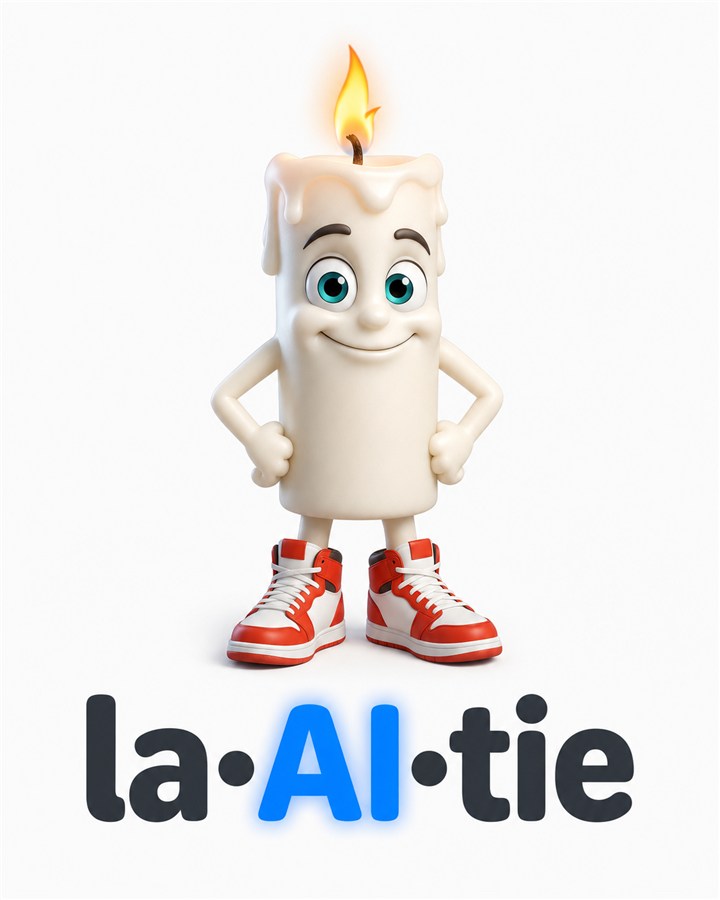
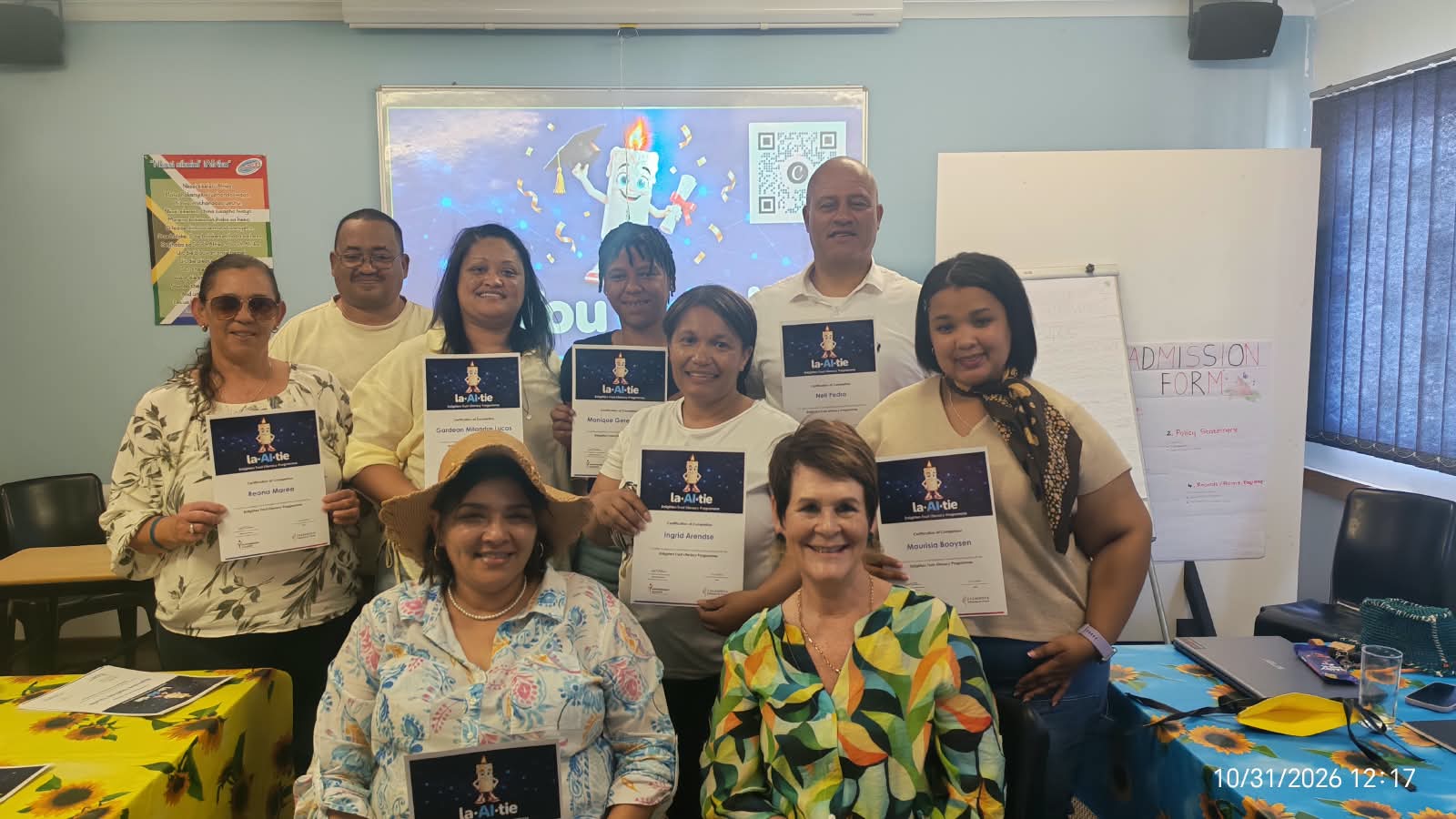
l-AI-tie is the AI Mascot for the Enlighten Education Trust AI Literacy Programme designed and facilitated by Melody Tomlinson.
Mel has designed and delivered AI workshops for leadership teams, sales teams and workplace learning groups across South Africa.
Organisations are listed as examples of workshop audiences. No endorsement is implied.
Proudly sponsored by Enlighten Education Trust
Nine educators from Hawston Primary and Secondary Schools completed the four-module AI Literacy Programme, sponsored by Enlighten Education Trust, culminating in a final project showcase in October 2026.
Mel collaborates with strategic partners to offer clients the most suitable solution for their requirements. This brings complementary skills into the room when a challenge calls for them.

Build the confidence to use AI in your everyday work. Across eight hands-on modules, you’ll learn to write effective prompts, use ChatGPT for everyday tasks, create images, audio and video, and explore ways to automate routine work. You’ll bring those skills together in a final project. No technical background is required.
Mel co-facilitates the programme, which is led by Learn AI founder Brad Janse van Rensburg.
Explore the BootcampAI is evolving too quickly for any of us to pretend we have all the answers. These are the questions I believe are worth asking.
Mel Tomlinson is a South African business coach, change practitioner, facilitator and AI trainer and consultant. She focuses on the human and organisational side of AI adoption, helping leaders and teams build confidence, practical capability and thoughtful ways of working with AI.
Start by learning enough to ask better questions, make sensible decisions and guide your people through the change. You do not need to become a technical expert. Begin with a few practical uses in your own work, such as thinking, planning, communication, summarising or problem-solving, and build confidence through use.
AI adoption should not sit with one person or department. The CEO or MD sponsors the direction and sets the tone. IT guides security, systems and technical risk. People and learning teams support confidence and change. Department leaders identify useful applications in real workflows. A small cross-functional team with clear executive sponsorship is often the strongest starting point.
Start small, practical and human. Choose a few use cases that make real work easier, create space for basic questions and guided practice, and explain what responsible use looks like. Treat AI as a learning journey, not a sudden technical transformation. Confidence grows when people can see relevance and feel safe enough to experiment.
Yes. AI changes how people think, work, communicate and make decisions. It can also raise concerns about competence, trust and job security. Change management helps leaders communicate clearly, involve people appropriately, establish practical guardrails and support new behaviours over time. AI implementation is both a technology initiative and a people-change process.
An AI Confidence Booster is a practical, plain-language workshop for leaders, teams and professionals. It may include demonstrations, guided prompting, workplace examples, responsible-use discussions and applications for communication, planning, problem-solving and decision-making. The aim is not technical mastery. It is to help people feel less intimidated and more capable of using AI thoughtfully.
Yes. A facilitated leadership session creates space to align on the opportunity, risks, business priorities, people impact, responsible use and practical next steps. It is particularly useful when some leaders are enthusiastic, others are cautious and the organisation does not yet share a clear view of what AI adoption should mean.
Bring the conversation into the open. Ask which tools people use, for what work, what information they enter and what useful practices early adopters have discovered. Then create practical guidelines that clarify what is allowed, what needs approval and what must never be shared. A blanket shutdown can drive use underground. Clear guardrails can protect the organisation while preserving curiosity and initiative.
Not necessarily, but the starting point must be realistic. Do not add every AI tool at once. Identify where people already struggle and introduce one or two uses that make work simpler, such as clearer emails, meeting preparation or summarising information. In some teams, better use of existing tools should come first. The goal is to reduce overwhelm and build capability in manageable steps.
Mel focuses on human-centred AI adoption rather than coding or technical implementation. Her work combines practical AI learning with business coaching, facilitation and change management. This is useful for organisations that need more than tool demonstrations: they need confidence, leadership alignment, responsible use, practical integration and attention to what happens when humans have to work differently.
An AI adoption consultant helps an organisation move from having access to AI technology to actually using it effectively. This can involve strategy, workflows, employee confidence, training, change management, governance, communication, leadership alignment and practical use cases.
People may resist AI because of uncertainty, fear of mistakes or job loss, weak use cases, unclear policies, insufficient training or confusion about approved tools. What looks like resistance is often a lack of confidence or clarity.
AI confidence is a person’s ability and willingness to engage with AI with enough understanding, permission and judgement to experiment and use it appropriately. It does not mean knowing everything. It means having enough clarity and support to begin thoughtfully.
Human-centred AI adoption considers how people, workflows, culture, leadership and technology interact. It focuses not only on what the technology can do, but on how people understand, trust, use and adapt to it.
Humaning with AI is Mel Tomlinson’s philosophy for working with artificial intelligence while continuing to develop curiosity, judgement, critical thinking, creativity and other distinctly human capabilities.
Start with clear use cases, practical training, understandable guardrails and permission to experiment responsibly. Involve leaders, address workflow changes and build confidence instead of simply providing access to tools.
Shadow AI, or Bring Your Own AI, refers to employees using AI tools independently, sometimes without formal approval or oversight. It often emerges when official tools, policies, guidance or workflows have not kept pace with how people want to work.
An AI champion supports responsible adoption inside an organisation. Effective champions help colleagues learn, experiment, share use cases, identify barriers and connect employee experience with the wider AI strategy.
IT is vital for technology, security, integration and governance. Effective adoption, however, also requires leadership, people functions, change, operations, learning, risk and the employees whose workflows are changing.
Yes. Mel works with leaders, teams and organisations on practical AI learning, AI confidence and the human side of adoption. She is based in Cape Town and works with clients in South Africa and internationally.
You do not need to have your strategy completely figured out. You may be exploring AI for the first time, have tools but limited adoption, or have enthusiastic experimenters racing ahead while others stand still.
Let’s start there.
mel@performancebooster.co.zaAI with Mel is part of Performance Booster (Pty) Ltd.
The future of work will not be shaped by AI alone.
It will be shaped by how well humans learn to work with it.
That is the conversation I want to be part of.AI with Mel does not currently collect information through website forms. If you contact Mel by email or telephone, your details will be used only to respond to your enquiry and communicate about relevant services. Your information will not be sold or shared for unrelated marketing.
This website links to external services such as LinkedIn. Those services apply their own privacy practices. For any privacy question, email mel@performancebooster.co.za.